Summary
K-12 systems face a version of the higher-education problem with tighter constraints — smaller budgets, younger students, higher stakes for early intervention. This lecture, also drawn from Volume 6 — The Informed Citizen — turns the framework toward primary and secondary education. The core argument: early-warning systems built on attendance, assignment, and assessment signal can identify at-risk students weeks before a teacher would notice unaided, and the interventions the models suggest are the same ones teachers already believe in — they just arrive at the right student, at the right week. The talk covers the data infrastructure a district needs to build (typically less than expected), the governance around student data that has to be non-negotiable, and the operational workflow that gets predicted risk into the hands of the counsellor who can actually do something about it. It is aimed at district superintendents, chief academic officers, and the ed-tech vendors who build the platforms under them.
Related volumes
This lecture connects to the following volume of the series. Each one deepens the material at book length:
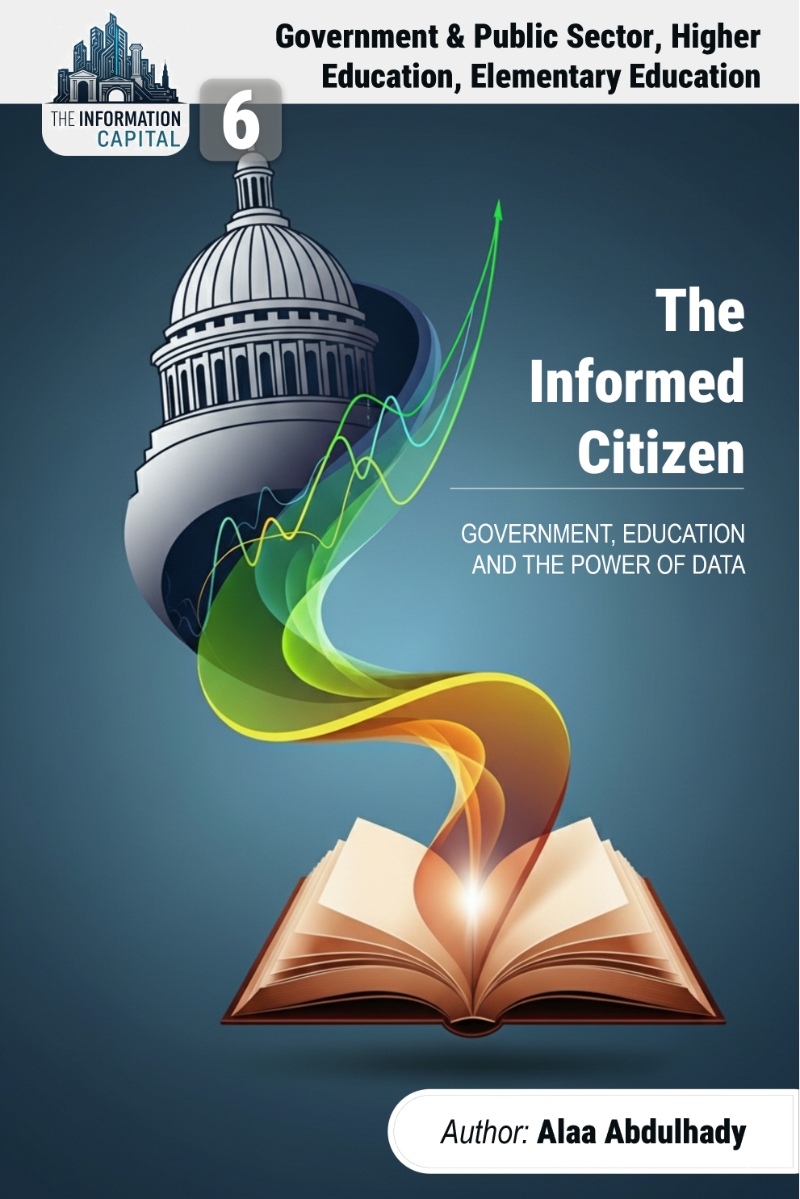 Vol 6 · The Informed Citizen
Watch on YouTube
Open on YouTube to switch caption languages, add to your library, or watch the full 12-lecture playlist. The embedded player above forces captions on in the page's active language when a track exists.
Read the series
The Information Capital is an eight-volume business-intelligence field manual by Alaa Abdulhady, published by Advanced Management Solutions. Buy the series on Amazon in hardcover, paperback, or Kindle. For speaking, framework licensing, or press, email noreply@amsol.ca.