What is BI Pulse?
BI Pulse is the operating rhythm that The Information Capital uses to describe a working business-intelligence practice. It is not a reporting cycle, an OKR ritual, or a quarterly review — it is a heartbeat. The organization senses its environment, forms an understanding, makes a decision, acts, and then sustains the cadence so the next pulse arrives on time. Everything else — the dashboards, models, warehouses, agents — exists to keep that heartbeat regular.
The framework compresses what most enterprises stretch across weeks or months into a rhythm that can be measured, tuned, and defended. When the pulse is strong, decisions arrive when the business needs them. When the pulse is weak, insight arrives after the decision was already forced.
Why "pulse"?
Because most BI programs treat measurement as an event — a report generated, a model retrained, a review scheduled. A pulse treats measurement as a continuous vital sign. You do not check a heartbeat once a quarter. You listen to it constantly, you notice when it changes, and you intervene when the change matters. BI Pulse asks the same discipline of the enterprise.
The five stages
Sense
Capture the signal at the boundary — transactions, sensors, interactions, external feeds. Latency and coverage are the two metrics that decide whether the pulse will be readable at all.
Understand
Transform raw signal into a shared representation — semantic models, predictive layers, feature stores. Understanding is the point where telemetry becomes something the business can reason about.
Decide
Route the understanding to whoever is authorized to act. This is the peak of the pulse — the moment where information becomes decision. The stage is human-centered even when automated.
Act
Push the decision back into the operational systems that made the telemetry in the first place — pricing engines, dispatch queues, care pathways, hiring pipelines. The pulse only counts if the world changes.
Sustain
Close the loop. Measure whether the action moved the metric that first raised the signal, retire what did not work, keep the tempo. Sustain is the difference between a project and a practice.
What BI Pulse looks like in practice
A finance team that catches an early warning of a fraud pattern within minutes rather than at month-end has a strong BI Pulse. A supply-chain planner who sees a demand shift in near-real-time and reroutes inventory the same shift has a strong BI Pulse. A hospital that spots a rising infection signal from admission telemetry before rounds and adjusts staffing has a strong BI Pulse. In each case the same five stages are running — the only difference is how tight the cycle is.
Where BI Pulse appears in the series
BI Pulse is the operational spine that ties the volumes together. It is introduced explicitly in Volumes 1 and 2, appears as the measurement discipline in the healthcare and industrial volumes, and returns as the sustaining rhythm behind the HR Synapse work in Volume 7.
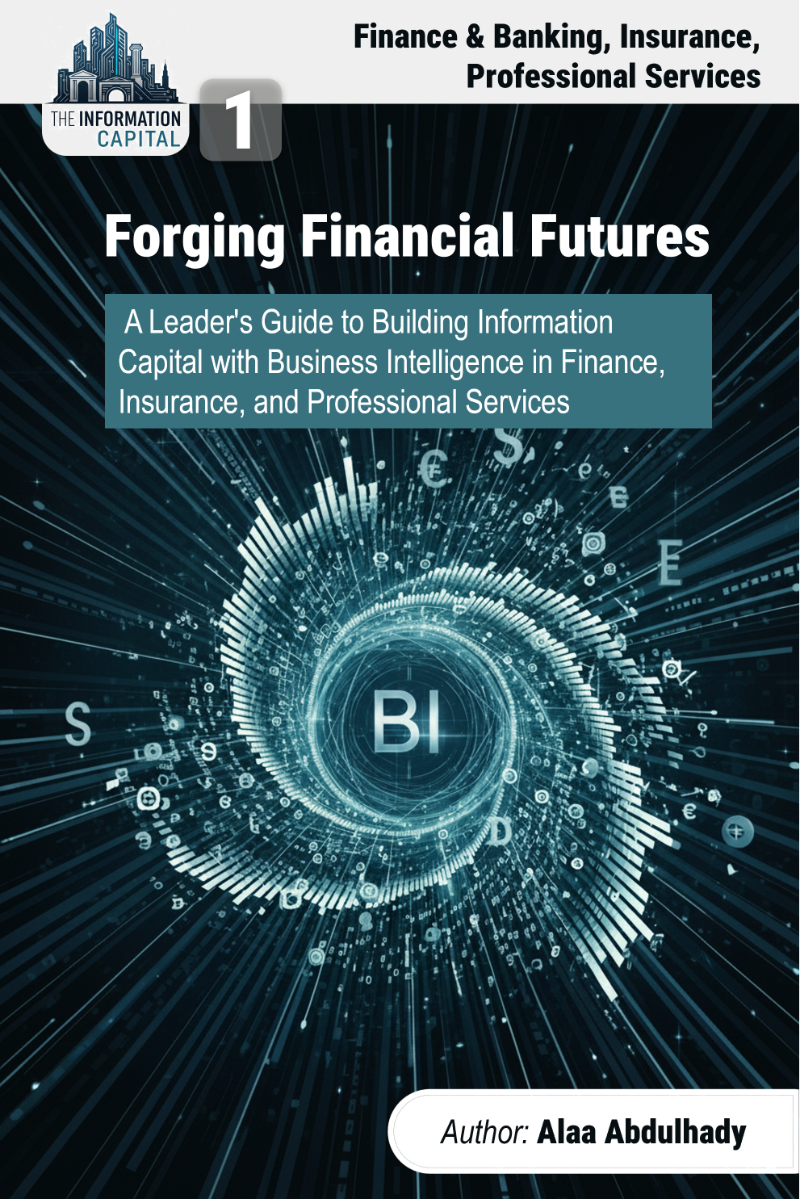 Vol 1 · Forging Financial Futures
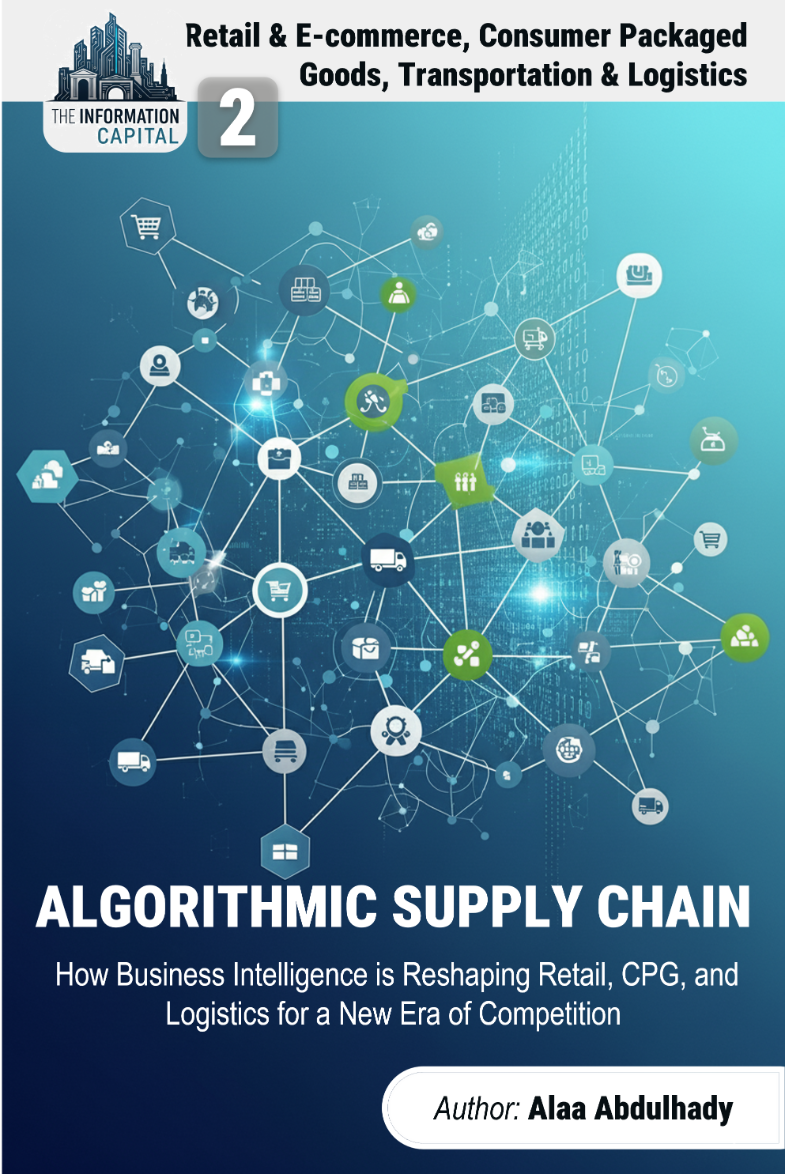 Vol 2 · Algorithmic Supply Chain
 Vol 3 · Curing with Code
 Vol 4 · Smart Factory Evolution
Related lectures
See the framework in motion in the recorded talks — BI in Strategic Planning introduces the measurement cadence at the executive level, and Data Wealth connects the same rhythm to the language of capital.
Read the series
BI Pulse is a working framework only inside the larger argument of The Information Capital. To see the five stages instantiated across finance, healthcare, industry, media, government, HR, hospitality, and sports — read the eight-volume series on Amazon. For licensing, framework workshops, or speaking, contact noreply@amsol.ca.